Sunday, March 20, 2011
Super perigee full moon over San Diego
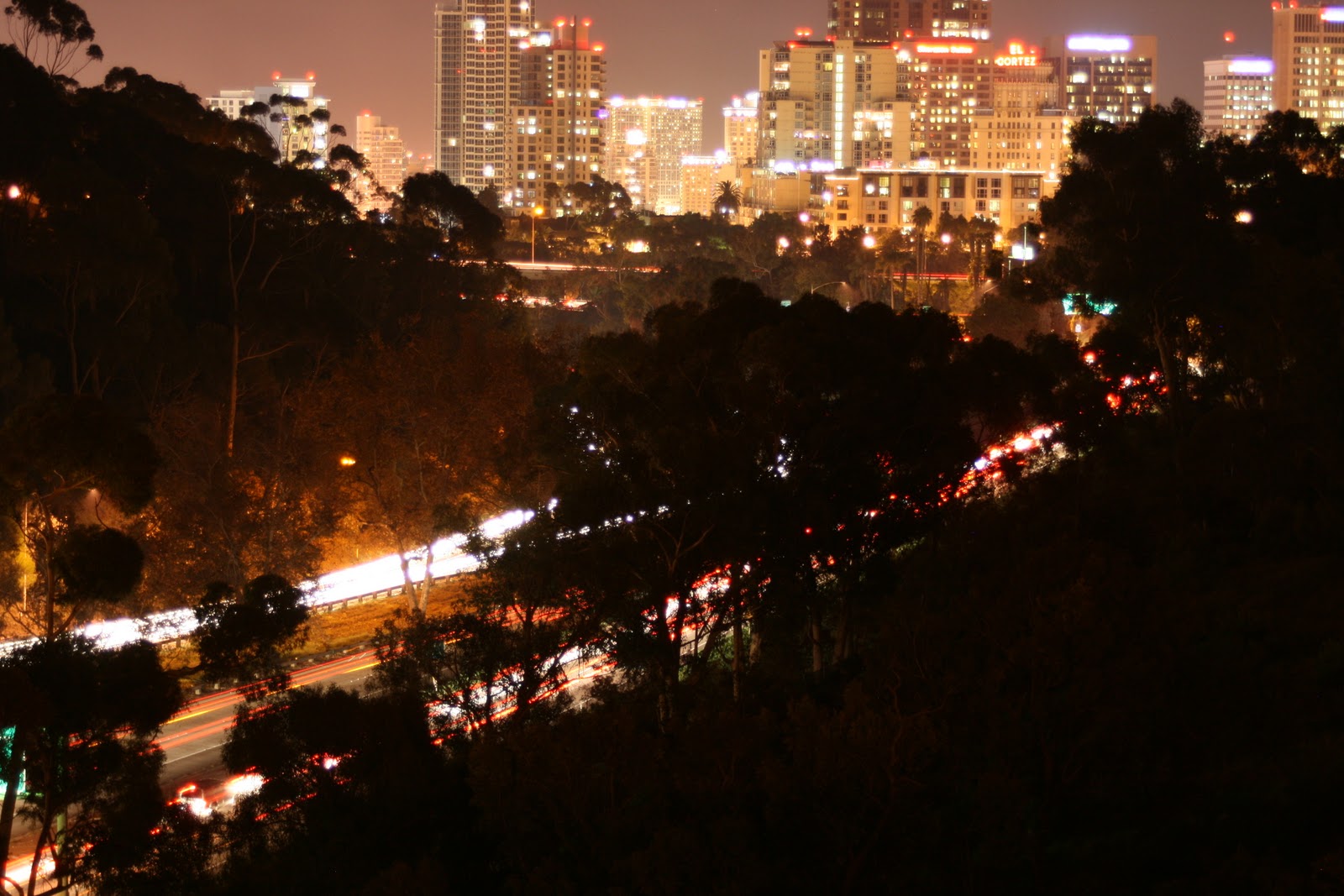
Here are a couple of photos looking toward at Mt. Woodson from my home in San Diego. This is the super perigee full moon that is almost 50,000 km closer to the earth. For all intents and purposes, it is pitch black at the time of moonrise.

Sunday, February 27, 2011
Snow in San Diego: The Iron Mountain Hike.
Normally it doesn't snow in San Diego. But here is proof that it does. Yesterday we got quite a rainstorm that left snow at the higher elevations in the county. Today, Beth and I climbed to the top of Iron Mountain, a few miles east of our home. Although there wasn't much on the ground around us, it did snow at elevations from 1000 feet and above. Warning: There are lots of panoramic-type shots of boring mountain things.
| Looking up Iron Mountain from the trail. |
| Indian Head is the small mountain to the left. San Vincente Mountain is on the right. Snow-covered Cuyamaca Peak is in the background. |
| Looking west from Iron Mountain. The hiking trail runs perpendicular to Highway 67. There is Black Mountain in the background. That's San Diego and the Pacific Ocean on the horizon. |
| Looking east. That's Cuyamaca Peak in the background. |
| Proof there is snow in San Diego. Okay it's up about 1000 feet. |
| Looking toward Barona Indian Reservation with Cuyamaca Mountains in background. |
| Cuyamaca Peak |
| Head Head and Cuyamaca Peak. Note Iron Mt. crucifix in foreground. |
| Town of Ramona. |
| Woodson Mountain. Looking north from Iron Mountain. |
| Of course, I had to get into the picture. |
Thursday, February 24, 2011
Vintage Red Ink Series: Crescent Freflo Red.
I love vintage red ink. I don't understand why. But I like writing with it. Here the first of many experiences.
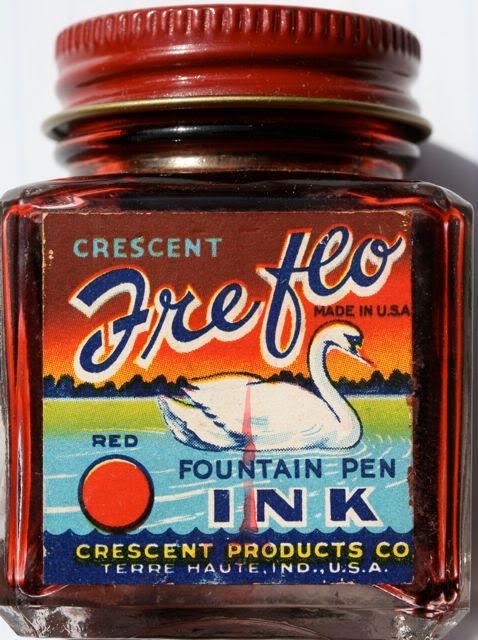
On occasion I come across half-used bottles of vintage ink that have been sitting in someone’s junk drawer for the past fifty years; cast out onto eBay after being unsold at an estate sale. These are swatches from days gone by. The colors are not spectacular, sometimes losing their brightness and luster: blacks are sometimes gray; spearmints are olive; and blues are washed out. The reds seem to be always true. Even in their best condition, they lack the saturation of modern inks. Yet, there is something wonderful and naturally right about dipping a vintage pen into an ornate bottle of vintage ink. The writing fluid seems designed for the old pens. It flows well. It doesn’t stain. It doesn’t feather on the paper. I found this half-used bottle of Crescent Product’s Freflo™ ink in red color. Freflo™ ink was produced by a chemical company in Terre Haute, Indiana, and sold primarily in the 1940s. It came in both oval and square-shaped bottles. As with most of these ink purchases, sometimes you find trash. But most of the time, you find treasure
Freflo ink was manufactured by for Crescent Products Co., of Terre Haute, Indiana. This ink is water based. I spilled this ink on a white shirt, and was able to completely remove the stain by immediately washing it with liquid hand-soap and water, followed by an application of isopropyl alcohol. It’s obviously not a permanent ink. But with vintage pens, it’s the characteristic I prefer. Crescent Products was located at 315 N. 14th St., Terre Haute, Ind., and produced ink and adhesives until the early 1960s (according to Terre Haute city and industry directories).
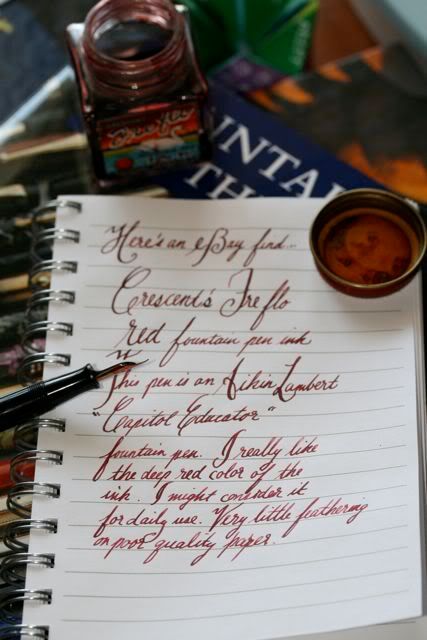
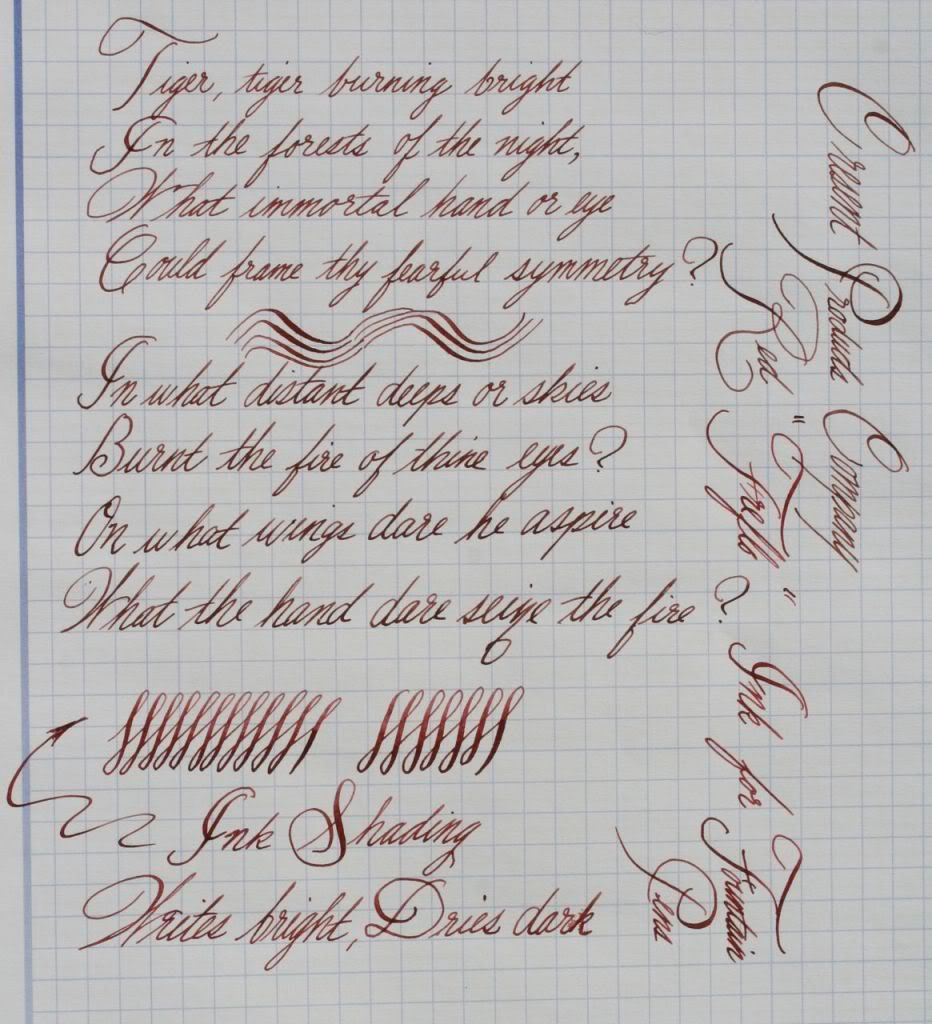
The color is a deep scarlet red, also known as carmine. I've compared the color to venous blood, or the red pepper and garlic sauce you find at Chinese restaurants. The ink writes in a dull pink, but darkens slightly as it dries. It is resistant to bleeding through the paper, but dries relatively quickly. I doubt that it contains iron gall material. As opposed to modern inks, I suspect this red is based on a natural cochineal dye. Cochineal is a sessile parasite of a desert cactus. Its body contains carminic acid, which is boiled out, and mixed with aluminum or calcium salts to produce a deep red dye that is commonly used in the food and fabric industry. The color has an attractive professional appearance that I have used for daily writing. It is an instantly recognizable color, especially if you were born before 1970.
Initially, I was not a fan of red ink, but Crescent’s Freflo ink has won me over. It has a deep rich carmine red that flows well and doesn’t clog in the pen. For old-timers, its color is easily recognizable, but rarely seen from modern inks and dyes. Freflo’s shading provides a nice contrast that is pleasing to look at. There is little feathering, and virtually no bleeding through the paper. I have used this as a daily ink. It stands out instantly on the paper, but doesn’t attract too much attention to itself. When purchasing vintage inks, do not use any writing fluid that contains mold or un-dissolved sediment.
On occasion I come across half-used bottles of vintage ink that have been sitting in someone’s junk drawer for the past fifty years; cast out onto eBay after being unsold at an estate sale. These are swatches from days gone by. The colors are not spectacular, sometimes losing their brightness and luster: blacks are sometimes gray; spearmints are olive; and blues are washed out. The reds seem to be always true. Even in their best condition, they lack the saturation of modern inks. Yet, there is something wonderful and naturally right about dipping a vintage pen into an ornate bottle of vintage ink. The writing fluid seems designed for the old pens. It flows well. It doesn’t stain. It doesn’t feather on the paper. I found this half-used bottle of Crescent Product’s Freflo™ ink in red color. Freflo™ ink was produced by a chemical company in Terre Haute, Indiana, and sold primarily in the 1940s. It came in both oval and square-shaped bottles. As with most of these ink purchases, sometimes you find trash. But most of the time, you find treasure
Freflo ink was manufactured by for Crescent Products Co., of Terre Haute, Indiana. This ink is water based. I spilled this ink on a white shirt, and was able to completely remove the stain by immediately washing it with liquid hand-soap and water, followed by an application of isopropyl alcohol. It’s obviously not a permanent ink. But with vintage pens, it’s the characteristic I prefer. Crescent Products was located at 315 N. 14th St., Terre Haute, Ind., and produced ink and adhesives until the early 1960s (according to Terre Haute city and industry directories).
The color is a deep scarlet red, also known as carmine. I've compared the color to venous blood, or the red pepper and garlic sauce you find at Chinese restaurants. The ink writes in a dull pink, but darkens slightly as it dries. It is resistant to bleeding through the paper, but dries relatively quickly. I doubt that it contains iron gall material. As opposed to modern inks, I suspect this red is based on a natural cochineal dye. Cochineal is a sessile parasite of a desert cactus. Its body contains carminic acid, which is boiled out, and mixed with aluminum or calcium salts to produce a deep red dye that is commonly used in the food and fabric industry. The color has an attractive professional appearance that I have used for daily writing. It is an instantly recognizable color, especially if you were born before 1970.
Initially, I was not a fan of red ink, but Crescent’s Freflo ink has won me over. It has a deep rich carmine red that flows well and doesn’t clog in the pen. For old-timers, its color is easily recognizable, but rarely seen from modern inks and dyes. Freflo’s shading provides a nice contrast that is pleasing to look at. There is little feathering, and virtually no bleeding through the paper. I have used this as a daily ink. It stands out instantly on the paper, but doesn’t attract too much attention to itself. When purchasing vintage inks, do not use any writing fluid that contains mold or un-dissolved sediment.
A few comments on the color sample figure.All of these samples were made from my red inks in my collection. I used a cotton swab and performed a swatch of color, followed by a second application to the first half, allowing it to shade. The paper was photographed in the afternoon sun. What I first noticed was that Pelikan Brilliant Red (this sample was from the 1930s) was almost identical to Reform's red (a new old stock). I suspect that they were made to the same formula by the same company. Noodler's Dragon's Napalm is a good copy of the Pelikan ink. I'll probably never use Levenger's Pinkly: it's just too pink. Yard-O-Led inks are made by Diamine. Crescent's Freflo Red is at the bottom. This color appears to be very similar to Diamine's Monaco Red. However, I do not have this ink available at present for comparison.
Monday, February 14, 2011
Last Valentine
I gingerly placed my stethoscope upon his chest, listening to his heart and lungs. He wasn't supposed to be contagious, but I couldn't be sure. He looked as handsome as a comatose 87-year-old man with a tube down his trachea could manage. The hospital staff had fallen in love with him. They didn't need family members to sell his status. They were desperately trying to rewrite the ending of his story.
Harold and his wife of 60-years were inseparable. They owned a little home on the beach, and remained active in their retirement. Harold and Emily were almost always together. Last week Emily began feeling ill. It was probably stomach flu. The next day her condition worsened. By that afternoon, Harold brought Emily to the hospital, where she died suddenly in the ER. Harold's blood culture produced that same virulent strain of bacteria. It is just days before her funeral.
I cannot begin to understand cosmic irony. Perhaps I have connected too many dots of their relationship over the past 60 years. I know there is an aspiration of love that transcends all of the flowers, diamond rings and romance novels. It is a love that cannot be encapsulated in a television drama. This is a love for which it may take a lifetime to know.
Friday, February 11, 2011
Thursday, February 10, 2011
Emma's Recipe For Soup
Here is my 13-year-old daughter's recipe for a vegetarian soup she made this evening. My daughter has this....ahhhhh....talent for literally rooting around the pantry, cupboards and refrigerator and mixing together these impossible ingredients to produce something very tasty. This morning she made herself a breakfast sandwich using a vegetarian sausage patty, a "secret" sauce and pickles. Tonight, she decided to make everyone soup. Sometimes its better not to know the names of the ingredients. She couldn't come up with a name for it, so I'll leave that one up to you. It tastes a lot like chicken tortilla soup, but without chicken. After I tasted it, I was so impressed with the results, as schizophrenic as they were, that I had to write down the recipe. Here's what she told me:
2 cans of vegetarian chili;
1 can of refried beans;
Chili powder (Me: How much? Her: I don't know.);
"Fake" beef broth;
3 "fake" sausage patties;
Dried instant onions;
Cheddar cheese, grated (approximately 1/2 cup);
"Lots" of corn;
A "lot" of milk (no water);
I cut up an avocado and threw it in.
I'd show you a picture of the soup in a pretty Mexican bowl with a sprig of cilantro, but I already ate the soup before I thought of the idea. Some people may think it's easier to buy pre-prepared packaged foods. It's much better to have a daughter.
2 cans of vegetarian chili;
1 can of refried beans;
Chili powder (Me: How much? Her: I don't know.);
"Fake" beef broth;
3 "fake" sausage patties;
Dried instant onions;
Cheddar cheese, grated (approximately 1/2 cup);
"Lots" of corn;
A "lot" of milk (no water);
I cut up an avocado and threw it in.
I'd show you a picture of the soup in a pretty Mexican bowl with a sprig of cilantro, but I already ate the soup before I thought of the idea. Some people may think it's easier to buy pre-prepared packaged foods. It's much better to have a daughter.
Wednesday, February 9, 2011
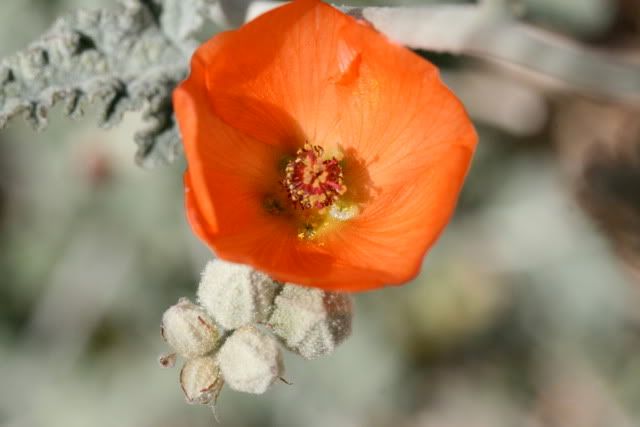
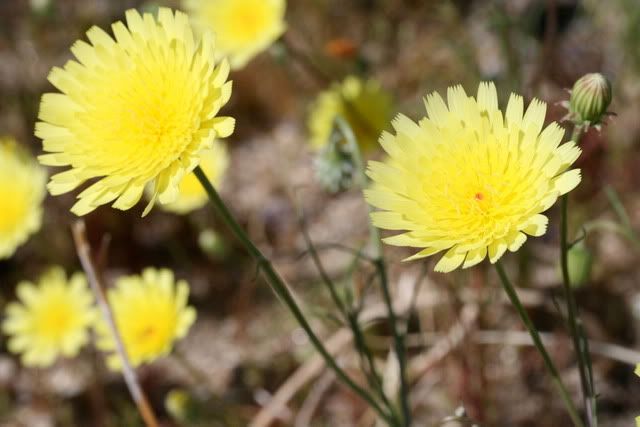
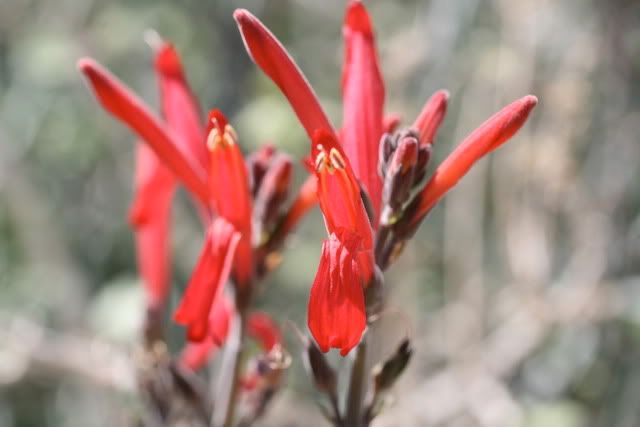
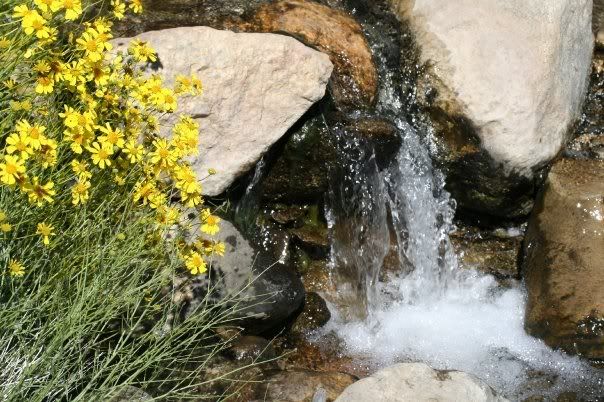
Desert flowers
Subscribe to:
Posts (Atom)